Exploring LiDAR as a Scalable Photonic Alternative to Turbidimeters for Water Turbidity Monitoring
DOI:
https://doi.org/10.53655/joe.s4382yKeywords:
Turbidity, LiDAR, Signal strengthAbstract
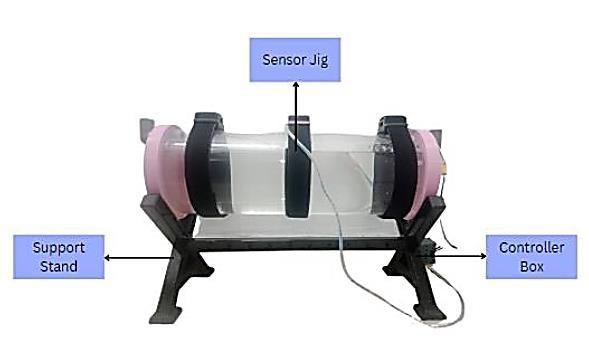
Water turbidity is a critical parameter for assessing water quality, conventionally measured using turbidimeters that rely on nephelometric light scattering. While effective, these instruments are constrained to labor-intensive sampling, limiting spatial and delayed data analysis. This paper explores the potential of LiDAR which a photonics-based ranging technology as an alternative method for turbidity assessment. Both turbidimeters and LiDAR operate on light-particle interaction principles. In this research, a compact TFmini-S LiDAR sensor was used in a controlled laboratory setup to observe signal strength changes in relation to turbidity levels measured by a conventional turbidimeter. Though limited in range, the sensor will be use to demonstrate a relationship between signal attenuation and turbidity. These results will provide foundational support for the future use of LiDAR in scalable, non-contact, real-time turbidity monitoring. The study invites further exploration into adapting LiDAR for broader environmental water quality applications.
References
S. M. Pershin, B. G. Katsnelson, M. Y. Grishin, V. N. Lednev, V. A. Zavozin, and I. Ostrovsky, “Laser remote sensing of lake kinneret by compact fluorescence lidar,” Sensors, vol. 22, no. 19, p. 7307, Sep. 2022, ISSN: 1424-8220. DOI: 10.3390/s22197307
V. I. Chernook, A. N. Vasilyev, Y. A. Goldin, B. A. Gureev, V. S. Goryainov, and A. A. Buznikov, “Oceanological monitoring of fishing areas using lidars,” in 2014 International Conference Laser Optics, IEEE, Jun. 2014, pp. 1–1. DOI: 10.1109/lo.2014.6886388
J. Ivanovs and M. Kriev¯ans, “Using LIDAR topography data for determination of morphology and terrace levels of the River Ogre Valley in Middle Latvia Lowland [abstract].,” Geology, Geophysics & Environment, vol. 42, no. 1, p. 76, 2016, ISSN: 0138-0974. DOI: 10.7494/geol.2016.42.1.76
J. W. O’Dell, Determination of turbidity by nephelometry, https://www.epa.gov/sites/default/files/2015-08/documents/method_180-1_1993.pdf, Ohio: U.S. Environmental Protection Agency, Aug. 1993.
D. G. Bowers, E. M. Roberts, A. M. Hoguane, K. A. Fall, G. M. Massey, and C. T. Friedrichs, “Secchi disk measurements in turbid water,” Journal of Geophysical Research: Oceans, vol. 125, no. 5, May 2020, ISSN: 2169-9291. DOI: 10.1029/2020jc016172
A. Jain, R. Jain, and S. Jain, “Digital nephelometer,” in Basic Techniques in Biochemistry, Microbiology and Molecular Biology. Springer US, 2020, pp. 23–24, ISBN: 9781493998616. DOI: 10.1007/978-1-4939-9861-6_11
ISO 7027-1:2016 Water quality - Determination of turbidity Part 1: Quantitative methods, ISO, 2016.
S. Palmer et al., “Ultraviolet fluorescence lidar (ufl) as a measurement tool for water quality parameters in turbid lake conditions,” Remote Sensing, vol. 5, no. 9, pp. 4405–4422, Sep. 2013, ISSN: 2072-4292. DOI:10.3390/rs5094405
Downloads
Published
How to Cite
Issue
Section
License
Copyright (c) 2025 Nur Aina Athirah Mohd Nizar, Juliza Jamaludin, Marinah Othman

This work is licensed under a Creative Commons Attribution-NonCommercial 4.0 International License.
By submitting documents to Jurnal OptoElektronik, the authors agree to the followings:
1. Articles are published under a Creative Commons CC BY-NC 4.0 license that allows third parties to read, download, copy and share their work provided proper acknowledgement are given.
2. The authors retain copyright and grant Jurnal OptoElektronik rights of first publication.
3. The authors are permitted and encouraged to share their work online (e.g., in institutional repositories or on their website)
4. The authors verifies that the submission has not been previously published, nor is it before another journal for consideration. If submitting an article for resubmission, the submitting author will need to notify the editor through the Comments for the Editor section in the submission process.
5. The authors are responsible to secure all necessary copyright permissions for the use of 3rd-party materials in their manuscript.
6. The author declares that this is their original work and has been written by the stated authors.